20 Resources That Will Make You More Effective At Commercial Espresso Machine
How to Choose a Commercial Espresso Machine Commercial espresso machines can be costly and a quality one requires routine maintenance and service by a trained technician. These machines may also require a change in the plumbing of a café to accommodate their water requirements. Commercial espresso machines have multiple brewing groups, and can serve many customers simultaneously. This allows for a greater range of drinks as well as greater consistency. It's an investment 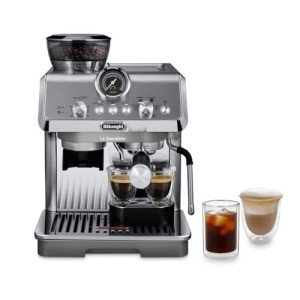 It is important to evaluate your options prior to deciding on a commercial espresso machine. There are a variety of things to take into consideration, including capacity and size and maintenance costs and design. It is important to select a machine that is certified and meets the safety and health standards. For instance, look for UL listings and NSF seals to make sure that your machine is safe to use in the coffee shop. What kind of commercial coffee machine is right for you will depend on the size of your business and the number of customers you have. If you operate a small café with low volume, then you may want to opt for an espresso machine that's manual with a single grouphead. If, however, you're a large cafe with a high demand it may be necessary to purchase an additional grouphead, or a triple machine. Another consideration is the size of your kitchen. You'll need to locate a place that's large enough to accommodate your commercial equipment but not so large that you can't reach it. Additionally, you'll need to ensure that your machine is well-maintained and clean. This will prevent blockages, build-ups and expensive repairs. In addition, you'll need to have a water filtration system place, which will remove the chlorine and sediment from your tap water. Commercial espresso machines can be expensive to repair and replace, so it's a good idea to find a reliable vendor that offers warranties on their products. You can also ask your vendor about the length of time they've been in business. Often the longer warranty is more affordable in the long in the long. Unlike home coffee machines, commercial machines are designed for heavy use and usually cost more than the home versions. They also require more frequent maintenance. This includes cleaning and periodic changes to the filter to eliminate minerals. You should also consider an industrial water filtration system that will protect your machine from the effects of sediment and chlorine. Commercial coffee machines can also vary in their ability to handle different kinds of drinks. For instance, some machines offer many drink options while others have limited options. Additionally, some come with special features such as built-in grinders or automatic milk frothers. These features can make the difference between a cup coffee that is great and one that fails to meet your expectations. It's a must The right commercial espresso machine can determine the quality and profitability of the coffee shop. It is crucial, just like any major purchase, to pick the most appropriate option for your company and budget. Start by determining the size of your company and the number of drinks you'll serve every day. This will help you decide how much space and power you'll need for your espresso machine. Find a machine that has longevity and reliability. Keep in mind that a knowledgeable consultant can assist you in finding the right espresso machine for your company. The steam wands, and the hot water dispenser are the most important features of a commercial coffee machine. These components are designed to create an enormous amount of drinks, so they must be constructed of durable and food-safe materials. Stainless steel is the most suitable choice, since it doesn't leach chemicals or rust in your coffee. Be aware of the barista's level of experience when choosing the right commercial machine. Consider a superautomatic machine in case your staff has no experience. It will simplify the process of making espresso. smeg espresso machine are typically on the higher end of the cost spectrum however they can be customized by adding features such as an integrated refrigeration unit for milk and varying degrees of menu control. A spring piston or manual machine might be better for experienced baristas who prefer more of a hands-on approach. You should also be aware of the possibility of growth for your business. The ideal espresso machine should be able to handle the expected sales volume during peak hours. If you plan to serve 120 drinks between 8 and 10:00 am during the morning rush, you'll require a semi-automatic espresso machine that can handle this volume. Also, think about the energy efficiency of your espresso machine. A high-quality espresso machine should be energy efficient enough to reduce your utility bills. Select a machine that is energy efficient, with stainless-steel boilers and heat recovery technology or opt for a certified Energy Star espresso machine. This will ensure that your coffee shop is complying with the requirements of the environment. It's a feature You'll need the right equipment to brew your coffee in commercial spaces. A quality espresso machine can establish the tone for your business and draw customers. This is especially important for coffee companies, since the specifications of the equipment are typically used to attract baristas (it's typical to see the specification of an espresso machine used in commercial establishments in a job description). One of the most important aspects to consider is the capacity of your commercial espresso machine. You need to know how many drinks you can produce in an hour so that you can determine the appropriate size and type of machine. If you are unsure about your needs, you may consider hiring an expert who can help you determine the amount of drinks you'll need in an hour. Another aspect to take into consideration when purchasing an espresso machine for commercial use is the amount of steam it will generate. A top-end machine will typically be able to produce more steam than a lower-cost model, making it worth the investment when you can afford it. A top espresso machine will also have an water filtering system. This is important, as it removes mineral deposits that could block internal plumbing. This is similar to cleaning out the plumbing in your car. It will ensure that your commercial coffee maker lasts for an extended period of time. Lastly, you need to decide on how your espresso machine will be connected to the building's plumbing. In general, you should connect a sanitizer drain to prevent the spread of germs and other particles. It is a good idea to also have a floor drainage system in the vicinity as a lot of local zoning boards require it for commercial establishments. Also, keep in mind that your commercial coffee machine needs to be approved for food service. Although this may differ from one place to the next, most states will have specific certifications that you'll need to meet to run the cafe or restaurant. If you don't have the right certifications you could face a fine or your business could be shut down. It's an idea The commercial espresso machine is an illustration of the fusion of science and art. It is a symbol for coffee lovers and the cornerstone of cafes. Its evolution is an interesting story of technological advancement and the culture that surrounds it. Commercial espresso machines are made of stainless steel or FDA approved materials, which means they do not release chemicals into the coffee you drink. They are also UL-listed and constructed with NSF Seals, which guarantee that they are in compliance with the requirements that are set by health departments. This is a crucial aspect because many states and cities require that any coffee-related appliance or equipment be an UL listed product, and constructed using NSF certified materials. There are many different types and each one has its own features and benefits. For instance, super-automatic machines can grind or dose, tamp and extract espresso shots at the touch of a button. They can also be fitted with a frother that can make lattes and cappuccinos. A traditional lever espresso machine is an alternative option. This requires a lot of skill and experience, but can produce amazing shots. The type of espresso machine you choose will depend on the production volume your business requires. If you're operating a bustling restaurant with long lines or a quiet study area with a steady flow of traffic, you will have to decide the number of drinks per hour you're planning to make. Also, you must consider your water and electrical requirements, which may affect the durability of your espresso machine. Heat exchange (HX) or dual boiler (DH) are the two primary categories of commercial espresso machines. HX machines utilize the same thermoblock for heating brew and steaming water, while DH machines have separate boilers for brewing and steaming water. Dual boiler machines are more efficient for steaming but provide a stable brew temperature. The first step to choose a coffee maker is to test the water's quality. It must be free of sediment, with a low pH, and excessive chloride. A filtration system is an inexpensive way to remove these contaminants, and it can help your espresso machine last for a long time. It will also enhance the flavor of your coffee.